Brain Test X: Hard Challenge
- 4.8
- Rating
- 1.00M
- Installs
- Free
- Price
 Analysis by App-foxy
Brain Test 5: Tricky Challenge is the kind of trivia game I open when I want a quick mental workout rather than a long gaming session. It comes from Unico Studio and focuses on puzzles designed to make me question the obvious answer. That basic idea sounds simple, but the best moments come from noticing that the wording, layout, or expected action is not quite what it first appears to be.
I found it most enjoyable in short bursts. It works well when I have a few spare minutes, although some puzzles can keep me busy longer than expected because the solution depends on changing my approach instead of merely knowing a fact. The game is free to start, rated for Everyone, and sits in the trivia section, but it feels closer to a playful brain-teaser collection than to a conventional quiz with a long list of general-knowledge questions.
What makes the puzzles tricky in practice
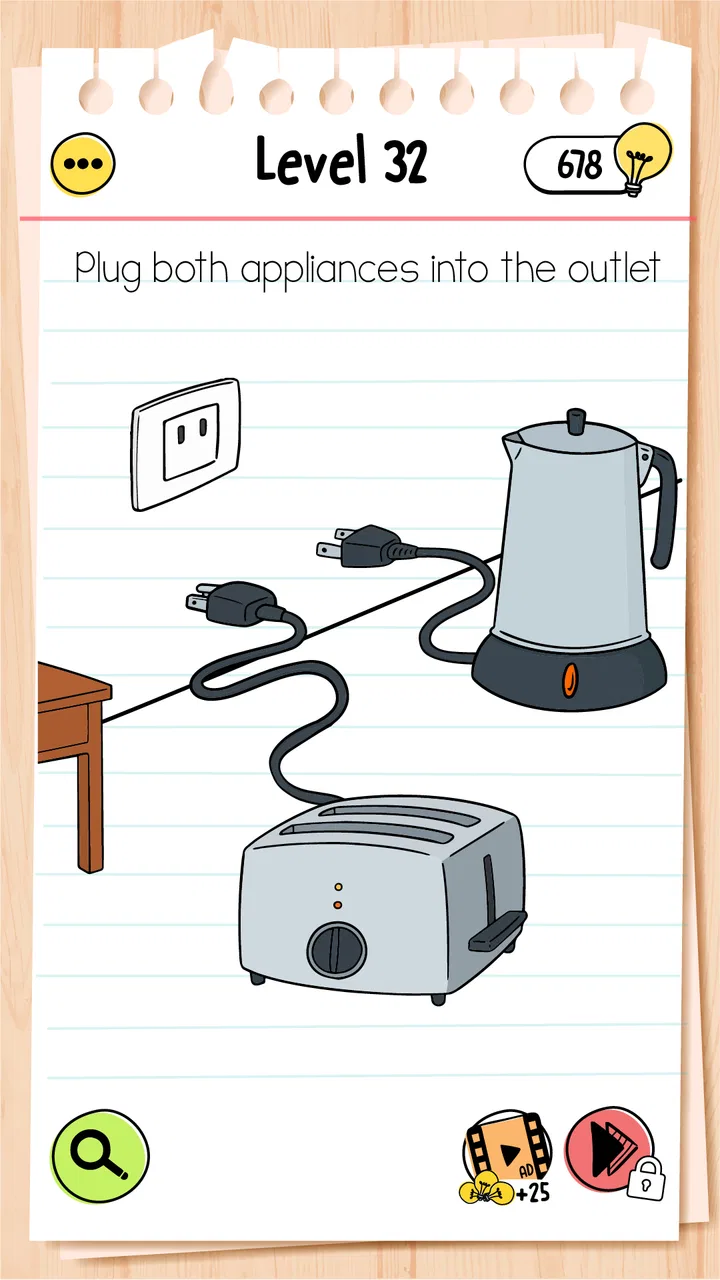
The main challenge is learning how to read each puzzle on its own terms. I quickly stopped assuming that the largest object on screen was the important one or that the first instruction should be followed literally. Sometimes the useful clue is in the wording; sometimes the answer comes from trying an unexpected interaction. That makes the game entertaining, but it also creates the first common sticking point: a player can understand the question and still miss the intended way to solve it.
You May Also Like

 Blood Strike: 2.5 Anniversary
Blood Strike’s Loadouts Turn Every Drop Into a Tactical Gamble
A close look at Blood Strike’s custom loadouts: how fast access to signature weapons reshapes its battle royale rhythm, rewards preparation, and narrows the gap between fights.

 Pandora - Music & Podcasts
Pandora’s Music Is Easy to Start, but Harder to Recover
Pandora’s strength is its low-effort path from a seed to a station. Its weak spot is how much confidence it asks you to place in connection, setup, and quiet recovery.

 8 Ball Pool
 Is Built on Rivalries, Rematches, and Routine
A close look at the rivalries, rematches, shared routines, and unanswered safety questions that turn a quick pool match into a persistent mobile community.

 Samsung Music
’s Quiet Strength Is Playing What You Already Own
Its reach comes less from spectacle than from dependable access to a personal library. That simplicity is both the app’s strongest retention engine and its ceiling.

 AccuWeather: Weather Radar
AccuWeather Review: A Quick, Clear Forecast for Everyday Decisions
For everyday plans, the best forecast is the one you can understand quickly. AccuWeather makes rain timing, radar, and local conditions easy to act on, with a few trade-offs.

 Hill Climb Racing
Why Hill Climb Racing Still Turns Crashes Into One More Run
A tiny car, a bumpy hill and one more upgrade: Hill Climb Racing keeps resurfacing because its simple chaos makes every near-miss feel personal.
More From Our News Desk
View All News


When I get stuck, I try a disciplined sequence instead of tapping everything at random. I reread the sentence, inspect the whole screen, and ask what the puzzle is trying to make me assume. Then I test the simplest alternative: moving an object, choosing something that looks irrelevant, or interpreting a word differently. This approach saves patience and makes the eventual solution feel earned rather than accidental.
The most useful habit is to treat every puzzle as a visual riddle, not just a question. That distinction matters for anyone coming from ordinary trivia apps. In a standard quiz, more knowledge usually improves your chances. Here, careful observation and flexible thinking can matter more than remembering facts.
Where a normal quiz player may hesitate
If you prefer clear rules and one correct answer selected from familiar choices, some stages may feel unfair at first. The game’s appeal depends on surprise, so it occasionally withholds the obvious path until you challenge the assumptions built into the prompt. I enjoyed that tension, but I can also see why someone looking for a calm, predictable quiz would find it irritating.
I also recommend playing without rushing. A timed feeling can develop even when there is no real reason to hurry. Taking a moment to inspect the wording often works better than repeated taps. When I played while distracted, I missed small clues and blamed the puzzle, only to solve it immediately after slowing down.
This is also a game where playing alongside another person can change the experience. One player may focus on the text while the other notices an unusual visual detail. For a family session, that makes the puzzles easy to discuss without requiring advanced knowledge. The Everyone age rating fits that broad accessibility, although younger players may still need help with the logic behind a few deliberately misleading challenges.
Getting started without unnecessary friction
The initial decision is straightforward because the game is free to download and try. I would still check that the device has a stable connection during setup and enough free space for a normal installation, especially on an older phone. The minimum operating-system requirement is Android 7.0, so users with older Android devices should check compatibility before spending time troubleshooting an installation that the phone cannot support.
Once it opens, I suggest beginning with a quiet test session rather than immediately playing in a noisy environment. The early puzzles help establish how the game expects you to think. If the screen does not respond as expected, I first close other demanding apps, reopen the game, and make sure the device is not struggling with low storage or memory. These are ordinary checks, but they prevent a simple phone issue from being mistaken for a puzzle problem.
The current version is 1.2.1. If an update is offered, installing it through the normal app store is a sensible first step when the game behaves strangely. I would avoid repeatedly reinstalling before checking the basics, because that can turn a small loading problem into a needless loss of local progress if the game does not restore it automatically.
In-app purchases range from ninety-nine cents to twenty-four dollars and ninety-nine cents per item. I mention that because the free entry point can make the game feel completely costless, while optional purchases may become relevant if you rely heavily on assistance. My advice is to play naturally first and decide later whether help is worth paying for. The puzzle itself is the reason to use this app, not the purchase system.
A practical routine for solving and recovering
My preferred workflow has three passes. First, I read the prompt exactly as written and identify any word that could have a second meaning. Second, I scan the complete screen, including elements that look decorative or unrelated. Third, I try one deliberate action at a time and remember what changed. This is more effective than frantic tapping because it turns each failed attempt into information.
When I cannot solve a stage, I take a short break instead of staring at it indefinitely. A few minutes away often helps because the puzzle relies on breaking a mental pattern. Coming back with a fresh view is particularly useful after I have repeated the same action several times. The game rewards curiosity, but it does not reward doing the identical thing faster.
If progress appears to have disappeared, I would first reopen the game and check whether the issue is limited to one session. I would also confirm that the device has not switched accounts or restricted the app unexpectedly. If the problem continues, the safest next step is to use the game’s normal support route through its store presence rather than deleting it immediately. I would not promise that reinstalling will preserve progress, so I treat that as a last resort.
Another useful recovery technique is to separate a genuine puzzle dead end from a technical failure. If the screen responds to some actions but not the one I expect, I assume I may have misunderstood the intended interaction before blaming the device. If the whole interface freezes, fails to load, or behaves inconsistently across several attempts, then restarting the app and checking the phone becomes more reasonable.
When the phone, not the game, is responsible
Not every failed launch or delayed response points to a defect in Brain Test 5. Older hardware, an overloaded background process, a nearly full storage drive, or an unstable connection can all create symptoms that look like an app problem. I normally test the game after closing unused apps and restarting the device. If it works normally afterward, I know I should adjust the phone setup before judging the game itself.
Battery-saving restrictions can also affect how an app behaves in the background, particularly if I leave it and return later. I check the device’s ordinary battery and app-management settings rather than changing several options at once. That way, if the problem disappears, I know which adjustment helped. I would avoid granting unusual access or installing separate “booster” tools just to make a small puzzle game run.
For a failed update, I check whether other apps can update normally. If they cannot, the store or device connection is the more likely source. If only this game has trouble, I restart the store app, verify available space, and try again later. These checks are intentionally simple; there is no advantage in performing risky system changes for a game that should be easy to launch.
Notifications, interruptions, and accidental touches are another everyday source of frustration. I get better results by playing in a stable position and avoiding repeated taps near the edge of the screen. On a crowded commute, I may misread a clue or touch the wrong object, so I prefer using the game at home or during a proper break when I can focus.
Who will enjoy it most
I would recommend this to players who like trick questions, visual puzzles, and the satisfaction of discovering that the expected answer is a trap. It is especially suitable for short sessions, casual family play, and anyone who enjoys discussing a puzzle after one person spots the hidden angle. The broad age rating also makes it easier to share than a game built around mature themes.
It is less suitable for someone who wants a serious knowledge test with transparent scoring, detailed explanations, or a structured learning path. It also may not satisfy players seeking a deep strategy game with long-term planning. The appeal here is the individual “aha” moment, and that experience can be weakened if you use hints too quickly or expect every stage to follow the same logic.
Compared with ordinary trivia alternatives, this game asks less of your memory and more of your willingness to challenge the question itself. Compared with pure brain-training apps, it feels more playful and less like a measured exercise routine. I would choose a conventional quiz when I want to test history, science, or current knowledge directly. I would choose this one when I want a lighter, more mischievous puzzle session.
My practical verdict
After spending time with it, I see Brain Test 5: Tricky Challenge as a good free option for people who enjoy being surprised by simple-looking puzzles. Its strongest quality is the way it turns ordinary assumptions into the obstacle. The game does not need a complicated setup to create that effect; it relies on observation, wording, and a willingness to try a different interpretation.
I would begin with the free experience, play slowly, and keep purchases optional. If a puzzle seems impossible, I would reread it, inspect the entire screen, and take a break before reaching for help. If the app itself fails, I would restart the device, check storage and compatibility, and avoid reinstalling until I had considered the risk to progress.
Unico Studio has made a trivia game that is approachable but not always predictable. Its average rating is 4.5 from around 4.9 thousand ratings, and it has passed half a million installs, which matches my impression that it has broad casual appeal. For me, the deciding question is simple: do you enjoy puzzles that make you rethink the obvious? If yes, Brain Test 5: Tricky Challenge is worth trying. If you want direct questions, dependable rules, and knowledge-based scoring, a traditional trivia app will probably be the better fit.
A small-session game with a social side
One everyday use I particularly like is keeping it for the quiet gaps that are too short for a story-driven game but long enough to focus: waiting for a meal, taking a break between tasks, or sitting with family after dinner. I would not make it my choice for a hurried minute at a crossing or in a crowded queue, since the visual details reward attention and interruptions can turn a clever misdirection into needless annoyance.
When sharing a puzzle, I find it more fun to let everyone inspect the screen before offering suggestions. A useful hint is often a question such as “What are you assuming?” rather than giving away an action. That keeps the person holding the phone involved and makes the game work as a conversation starter instead of a race to tap first. It is a good fit for mixed knowledge levels because the challenge is usually about perspective, not who has memorized the most facts.
Making the free entry point count
Because the game costs nothing to begin, I would treat the first session as a test of whether its style suits me, not as a promise that every possible aid will remain free. The listed purchase range makes it sensible to pause before buying anything: ask whether I am stuck on one unusually stubborn puzzle or whether I am relying on help so often that the purchase would change the way I play. If I enjoy the reasoning, waiting and returning later may be more satisfying than paying to bypass it.
That is also why I would not use a purchase as the first response to frustration. I first reread the clue and take a short break; if I still want assistance, I can make a deliberate choice rather than spending in the heat of the moment. For players who prefer a completely predictable, no-purchase experience, a plain quiz with direct questions may feel like better value even if it offers less surprise.
Choosing it over another kind of puzzle
The best alternative depends on what I want from a break. A standard multiple-choice trivia game is a better pick when I want clear scoring and a direct test of what I know. A structured brain-training app suits someone who wants exercises organized around repeated practice. This game serves a different mood: I want one compact puzzle, a surprising interpretation, and the satisfaction of spotting why my first answer was wrong.
That difference is both its strength and its main limitation. The trick-question format can feel inventive when I am open to being fooled, but less fair when I expect a consistent rule or an explanation that teaches a repeatable skill. I would skip it if ambiguity reliably irritates me, or if I need a game that stays engaging without focused attention. For curious players who enjoy changing their point of view, its free starting point makes it an easy, low-commitment try.
FAQs for Brain Test X: Hard Challenge
01What is Brain Test 5: Tricky Challenge and how does it work?
Brain Test 5: Tricky Challenge is a puzzle game designed to test your brain with unexpected and tricky challenges. It features a series of levels where each puzzle requires out-of-the-box thinking. Users must solve each level by interacting with the screen in creative ways, often requiring lateral thinking and humor to find the solution.
02Is Brain Test 5: Tricky Challenge suitable for all ages?
Yes, Brain Test 5 is designed to be a family-friendly game suitable for all ages. The puzzles are crafted to be challenging yet approachable, making it a great choice for both children and adults. However, younger children might need some assistance in understanding the more complex puzzles.
03Does Brain Test 5: Tricky Challenge require an internet connection to play?
No, Brain Test 5: Tricky Challenge can be played offline, making it a convenient option for users who want to enjoy the game without needing a constant internet connection. This feature is particularly useful for playing on-the-go or in areas with limited internet access.
04Are there any in-app purchases in Brain Test 5: Tricky Challenge?
Yes, while Brain Test 5 is free to download and play, it does offer in-app purchases. These purchases can include hints or solutions to puzzles, which can help players who are stuck on difficult levels. It's important for users to be aware of these options, especially if the app is being used by children.
05How can I get help if I'm stuck on a level in Brain Test 5?
If you're stuck on a level in Brain Test 5, you can use the hint system within the game. Hints provide guidance to help users solve puzzles without giving away the entire solution. Additionally, online communities and forums dedicated to the game can offer tips and walkthroughs to assist players.
Pros
- Engaging puzzles that stimulate critical thinking.
- Variety of levels keeps gameplay fresh and fun.
- Simple
- intuitive interface for easy navigation.
- No need for internet connection to play.
- Hints available for challenging levels.
Cons
- Ads can be frequent and interrupt gameplay.
- Some puzzles may feel repetitive over time.
- In-app purchases for hints can be costly.
- Limited replay value once levels are completed.
- Occasional bugs may disrupt the experience.

Brain Test X: Hard Challenge
Gallery